Social Listening Vs Social Monitoring: What’s The Difference?
Brands don’t lose trust in one moment. It usually builds from smaller moments: an unanswered complaint, an “Is this legit?” comment under an ad, a competitor recommendation in a community group, or a repeated customer concern that never reaches the right team.
That’s where social monitoring and social listening help. They solve different problems, but using both helps brands respond faster while making smarter decisions.
This guide explains the difference between social listening and social monitoring, when to use each, and how Groups Watcher helps track important Facebook group conversations.
TL;DR
The difference between social listening and social monitoring is simple: monitoring helps brands respond to conversations in real time, while listening analyzes conversations over time to guide future decisions.
Social monitoring focuses on brand mentions, customer questions, and reputation risks, while social listening uncovers customer sentiment, competitor activity, and recurring trends.
Brands get the best results by using both. Monitoring protects your reputation today, while listening improves marketing, products, and customer experience over time.
Groups Watcher helps brands monitor and analyze Facebook group conversations with real-time alerts, recurring conversation tracking, and automatic comments.
The One-Line Difference Brands Should Remember
If you want the simplest version, it’s this: social media monitoring protects the present and social media listening guides the future.
Monitoring tells you what needs attention right now.
Listening, on the other hand, tells you what needs to change so fewer issues happen in the first place, and your messaging lands better next month. A listening strategy helps your team track industry trends.
Monitoring Protects the Present
Social monitoring is the daily “keep us safe and responsive” layer. You monitor brand mentions, comments, direct messages, ad threads, and community conversations so nothing important sits unanswered.
Simple social media monitoring tools help you reply to customer inquiries quickly. It’s how you prevent small problems from becoming public proof points against your brand.
Get high intent leads from Facebook groups.
Turn Facebook groups into a lead source for your business. Book a demo to see if it fits.
Book a demoFast response helps with crisis management and stops negative mentions.
Listening Guides the Future
Social listening is how you extract signal from the noise. You look at weeks or months of online conversations to identify sentiment, recurring objections, product gaps, competitor momentum, and customer language.
Looking at customer feedback gives you valuable insights about your target audience. It’s how brand teams improve positioning, content, support scripts, and product decisions with evidence.
Through actionable insights, you can improve customer satisfaction and create a better business strategy.
What Is Social Monitoring?
Social monitoring is tracking brand activity in real time so you can respond quickly. It includes brand mentions, comments, tags, ad comments, direct messages, and any thread that could affect trust.
Many companies watch their social media accounts closely to catch every tag before it goes unanswered.
Besides that, monitoring is about triage, response, and resolution. It answers questions like: “What needs a reply?” “Is this a risk?” “Who should handle it?”
Tracking alerts for single posts instead of studying long-term patterns is also a fundamental difference between monitoring and listening.
For brands, monitoring is the operational layer that helps protect reputation every day. You can respond to direct mentions, answer customer questions, track mentions until every issue is handled, and fix complaints before they spread.
If Facebook groups are part of your monitoring strategy, Groups Watcher helps you catch important posts early and respond before your competitors.
Get alerts for Facebook group posts and respond quickly with Groups Watcher!
What Is Social Listening?
Social listening is analyzing social conversations over time to understand what people think, why they think it, and what is changing. It includes sentiment analysis, theme tracking, trend spotting, and competitor comparisons.
Listening is about extracting insight and turning it into decisions. It answers questions like: “What’s the top objection this month?” “Where are we losing trust?” “Which competitor narrative is spreading?”
Looking beyond brand mentions helps you study the broader conversation. Reviewing listening data further gives you a deeper understanding of customer needs.
Listening tools collect discussions from blogs, forums, review sites, and social media platforms. Many platforms group audience sentiments into positive, neutral, and negative categories and identify new industry buzzwords before they become common.
Good listening helps brands make smarter decisions using real customer language.
Social Listening vs Social Monitoring: Key Differences
If you’re building a brand program, these differences are not just definitions. They decide who handles the work, what tools teams need, and how brands measure success.
Social monitoring focuses on quick responses to individual posts. Then, social listening studies larger patterns to help teams make future plans.
Understanding these differences helps brands choose the right approach for their needs.
Purpose: Tactical Response vs Strategic Intelligence
Social monitoring exists to protect and respond. Social listening exists to understand and improve.
Monitoring handles immediate issues like customer complaints, questions, and mentions. You can see an alert, check the post, and decide the next action.
Social listening looks for patterns over time. Strategic listening helps you find deeper trends, customer opinions, and strategic insights that support your business goals.
Scope: Specific Mentions vs Market Conversation
Monitoring focuses on specific items: a comment, a mention, a direct message, or a thread. Teams often watch their own social media channels and direct brand mentions to find posts that need replies.
Social listening expands the view. It studies the broader conversation around a product category, including discussions where people never mention the brand directly.
Timeframe: Immediate vs Long-Term
Monitoring is measured in minutes and hours. Typically, businesses measure success by how fast they answer questions, handle complaints, and close support issues.
Listening looks at conversations over weeks, months, or longer periods. Historical data can reveal market trends and emerging trends that you might miss when you only focus on daily alerts.
So, monitoring asks, “What needs a reply now?” Listening asks, “Why does this keep happening?”
Output: Resolved Threads vs Decision Inputs
Monitoring outputs completed actions: replies, resolved support issues, hidden spam, and routed escalations.
Primary output alerts can find open issues quickly and respond before problems grow.
On the contrary, listening outputs decisions: content topics, messaging changes, product priorities, community strategies, and competitive positioning updates.
These can help you make strategic decisions about content, products, messaging, and campaigns.
Ownership: Community/Support vs Insights/Marketing/Product
Support and community managers usually own monitoring because the work requires fast replies and daily attention.
Listening is often owned by marketing, product marketing, insights, or PR because it feeds strategy. They review customer patterns, competitor activity, and audience intelligence to improve brand decisions.
Brands fail when there’s no ownership. Monitoring becomes inconsistent, and listening becomes a dashboard that nobody uses.
Examples Brands Can Relate To
The easiest way to understand social listening vs social monitoring is to look at the same situation through both lenses.
Monitoring and listening often start with the same signal. They diverge in what you do next.
Social Monitoring Example
A negative comment appears under a paid ad: “This doesn’t work. Customer support ghosted me.”
The social monitoring action is immediate. You check if the issue is real, respond calmly, send the concern to support, and move the conversation to direct messages when needed.
A quick reply can turn a frustrated customer into a positive interaction and show others that the brand responds.
Social Listening Example
Over 60 days, your team notices recurring patterns in comments: confusion about pricing, skepticism about outcomes, and repeated competitor comparisons.
You can review social listening data to understand customer concerns, improve ad copy, update FAQs, and create content around common questions.
For example, a brand may study public discussions after a software update and notice a rise in negative sentiment. You can use tools to review charts, measure brand sentiment, and understand how customers feel about the change.
When Brands Should Use Social Monitoring
Brands should treat social monitoring as always-on. Even if you post once a week, your audience can talk about you every day.
Monitoring prevents reputation drift by ensuring you’re present where it counts.
Reputation Risk and Crisis Early Warning
Monitoring is your early warning system. It catches sudden increases in complaints, misinformation, and negative posts before they spread further.
A monitoring tool can flag unusual activity, such as a brand receiving 5,000 mentions in one hour when the normal amount is 50. You can set alerts for high-risk words like “scam,” “lawsuit,” or “broken” to find serious issues faster.
Quick responses support reputation management because you can review the problem, follow escalation steps, and share an official response before the issue grows. Automated alerts serve as a powerful tool for finding possible PR problems early.
Customer Support and Community Management
If customers ask questions publicly, your response is part support and part marketing. A helpful answer builds trust with the person who asked and anyone reading the thread.
Monitoring ensures those questions don’t sit unanswered. It also helps you spot when a support issue is becoming a public pattern that needs escalation.
Campaign and Launch Oversight
During launches, monitoring becomes important because new products and campaigns create many questions. Customers may report errors, share opinions, or ask how a new feature works.
You can track campaign hashtags, product mentions, and early reactions to see how people respond to marketing campaigns. Monitoring tools review comments, shares, and engagement metrics to show how audiences react during the first hours of a launch.
When Brands Should Use Social Listening
Social listening is the layer that turns “We’re busy replying” into “We’re improving outcomes.”
It’s how brands build strategy with real customer language rather than internal assumptions.
Positioning and Messaging Improvements
Listening shows you what people believe about your brand, not what you want them to believe.
If customers misunderstand your product or repeat the same concern, listening reveals those patterns. You can review customer language from forums, comments, and reviews, then use those words in future content.
A brand strategy starts with understanding what consumers value. Changing how you speak to your audience can improve your social media strategy and make your message feel more relevant.
Competitive Intelligence and Share of Voice
Listening shows what competitors are praised for and what customers criticize about them. It can show the comparison language people use when choosing between products.
Social listening tools let you track competitor mentions and measure conversation volume. Competitive benchmarking also shows how your brand compares with others in your market.
When people keep asking for “alternatives to” a competitor, your brand can create content that answers those questions and highlight your own strengths.
Product and CX Insights
Listening gives you a steady source of product and customer experience feedback.
A social listening strategy helps you collect raw consumer feedback and turn it into product decisions. Social media marketing teams can use these findings to create content that matches what buyers actually want.
Brands that listen well can fix repeated issues at the source instead of handling the same complaints again and again.
The Brand Operating Model
High-performing brands don’t choose monitoring or listening. They run both as one operating system.
Think of it as daily protection and weekly improvement.
Daily: Monitor and Resolve
Daily work is monitoring. You respond to customers, route issues to the right team, tag high-risk posts, and close open conversations.
Brands that use monitoring can stay aware of customer issues every day. You can handle urgent posts quickly and keep important conversations from being missed.
Weekly: Listen for Themes
Weekly work is listening. You review the past week’s mentions, group similar topics, and identify changes in customer conversations.
The review process turns scattered comments into priorities, such as common objections, new discussions, support problems, and competitor activity.
You can use these patterns to adjust your marketing strategy.
Monthly: Turn Insights Into Decisions
Monthly work is action. You update content plans, adjust messaging, improve FAQs, refine ads, and change internal processes based on what customers say.
Listening becomes more useful when you connect findings to specific decisions. A report about repeated product complaints should lead to a product review, not just another chart.
You can perform a monthly strategic analysis to show which products are gaining interest, which topics are declining, and where customer needs are changing.
Quarterly: Strategic Narrative and Category Shifts
Quarterly work is bigger. You review how customer expectations shift, which messages gain attention, and where your brand needs a new direction.
Long-term reviews help you understand changes in buyer behavior and adjust your position before competitors take the lead. You can also review quarterly reports to collect key takeaways about changing customer groups, new market needs, and shifts in how people choose products.
Brands that follow this process spend less time reacting and more time preparing for future changes.
Metrics Brands Should Track for Each
Both monitoring and listening require different metrics because they produce different outcomes. If you track the wrong metrics, you’ll optimize for the wrong behavior.
Social Monitoring Metrics
Monitoring metrics should measure responsiveness and risk control. Response time matters because speed is a trust signal.
Also track response rate and resolution time. If you reply to customers but leave issues open, the public conversation can continue and attract more attention.
A simple weekly check of unresolved or high-risk threads can prevent slow-motion reputation damage.
For brands focused on sales, tracking how many clicks become customers can show whether social lead generation efforts bring real results.
Social Listening Metrics
Listening metrics should measure patterns. Track sentiment trends, theme frequency, recurring objections, and competitor comparison volume.
You don’t need perfect sentiment scoring to get value. Brands mainly need direction: are negative discussions growing, which topics create strong reactions, and what changed after a messaging update?
To understand public opinion, you can review positive and negative discussions. Measuring praise compared with criticism can help you protect a positive brand image and see how people view you online.
Common Mistakes and How Brands Fix Them
Most teams fail because their program is mislabeled or mis-owned. These are the mistakes in both social listening and social monitoring that keep brands stuck in reactive mode.
Mistaking Monitoring for Listening
Replying quickly is good, but it’s not listening. If your team answers comments all day and nothing changes, you’re monitoring without learning.
Fix this by adding a weekly theme review and forcing decisions. One insight should produce one action every week.
Listening Without Action
Some teams buy listening tools and build dashboards, but nobody owns the follow-through. The result is insight theater.
Fix this by routing insights into a decision cycle: content updates, messaging changes, product feedback loops, and support script improvements.
Tracking Too Broadly
When tracking is too broad, alerts become noise and teams stop paying attention. That leads to missed real risk.
Fix this by tightening keywords, adding exclusions, and focusing on the highest-signal surfaces first.
No Ownership or Escalation Rules
When nobody owns monitoring, threads go unanswered. If nobody owns listening, insights get ignored.
Fix this by defining ownership by bucket: support for support, marketing for messaging, PR/comms for high-risk, and product for recurring requests.
Tooling Categories
Brands should choose tools based on workflow, not brand names. The stack looks different depending on your volume, your risk tolerance, and where your audience talks.
The key is to cover both real-time and strategic layers.
Monitoring Tools
Monitoring tools support real-time response. They centralize mentions, comments, and messages, then help you route and resolve.
For brands running ads, monitoring should also include ad comment workflows because that’s where reputational risk can accelerate quickly.
Listening Tools
Listening tools support aggregation and analysis. They help you see sentiment trends, topic clusters, and competitive narratives across time.
This category is most valuable when it feeds decisions. If it doesn’t change your messaging and content, it’s not doing the job.
Why Facebook Groups Change the Stack
Many brand conversations happen in Facebook groups where people speak more openly and ask peers for recommendations.
This creates a gap. Page-first tools often miss group conversation signals unless you intentionally add a group layer. For many categories, that’s where the highest-signal mentions and comparisons live.
How Groups Watcher Fits Into Brand Monitoring and Listening
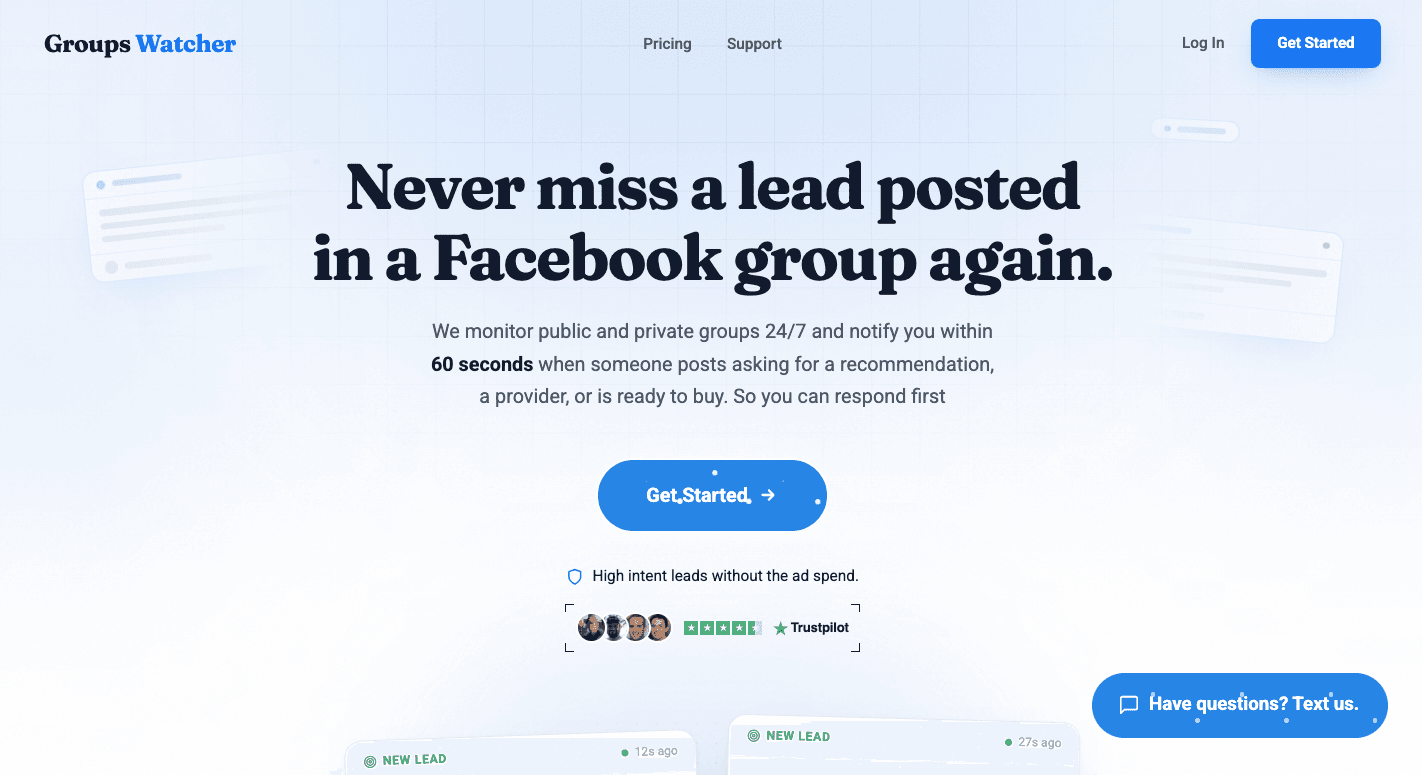
From a Groups Watcher perspective, the biggest blind spot for brand teams is group conversation visibility.
Brands often monitor pages and ads well, but miss what’s being said in communities. That’s where untagged mentions, competitor recommendations, and “Is this legit?” threads show up first.
Monitoring With Groups Watcher
Groups Watcher supports real-time monitoring of both public and private Facebook groups, even when users don’t have admin access or membership in those groups. You can choose the groups you want to track, select keywords, and receive alerts when matching posts appear.
That gives you early visibility into recommendation threads, negative claims, and competitor comparisons while the conversation is still forming.
In addition, it sends alerts in under 60 seconds, so you can see important posts before other users respond.
Listening With Groups Watcher
Groups Watcher also supports the listening layer by helping you track recurring patterns in group conversations.
Let’s say the same objections appear repeatedly; that’s a messaging input. Once the same competitor keeps getting recommended, that’s positioning intelligence. If sentiment shifts after a launch, that’s an early signal worth investigating.
Group conversations often surface raw voice of customer. Capturing that consistently makes your listening program stronger.
Best-Fit Brand Use Cases
Brands typically use Groups Watcher for brand mention alerts, early detection of reputation risk threads, competitor comparison monitoring, and voice of customer capture from community conversations.
Local service businesses use it to find recommendation requests and lead opportunities inside industry and local groups. Meanwhile, real estate professionals can monitor groups for referrals, buying requests, and selling opportunities.
Groups Watcher can automatically comment on matching posts with predefined replies, which lets you respond faster and stay among the first people to join important conversations.
If group conversations matter in your category, Groups Watcher helps you see discussions that traditional monitoring methods may miss.
FAQs About Social Listening vs Social Monitoring
What is the difference between social monitoring and social listening?
Social monitoring tracks and responds to individual posts, mentions, and messages in real time. Social listening studies conversations over time to understand trends, customer opinions, and recurring themes that support business decisions.
What is the difference between listening and monitoring?
Monitoring focuses on immediate action. Listening focuses on long-term analysis. Monitoring answers, “What needs a response now?” Listening answers, “What can we learn from these conversations?”
What is the difference between social listening and social engagement?
Social listening analyzes conversations to understand what people think. Social engagement is the act of replying, commenting, liking, and interacting with people on social media.
Ready to get more leads from Facebook groups?
Book a demo and see how Groups Watcher can turn Facebook groups into a lead source for your business.
Book a demo