A Beginner's Guide to Facebook Sentiment Analysis

People often share honest thoughts about products and services on Facebook. Reading thousands of posts by hand takes too much time, especially for large brands.
Sentiment analysis examines Facebook data to measure customer sentiment and group messages into positive, negative, or neutral categories. Many companies use those results to monitor brand reputation and review marketing campaigns.
In this article, you'll learn what Facebook sentiment analysis is, what you can measure, and how to choose the right tool.
TL;DR
Facebook sentiment analysis uses AI to classify Facebook posts, comments, reviews, mentions, and group discussions as positive, negative, or neutral.
Tracking sentiment helps you monitor brand reputation, understand customer feedback, and spot trends early.
Key metrics include positive sentiment, negative sentiment, neutral mentions, brand mentions, and engagement trends.
Choose a tool with accurate AI, broad Facebook coverage, strong security, and clear reporting.
Groups Watcher helps you monitor public and private Facebook groups and receive alerts in under 60 seconds, so you can find more customer conversations and be the first to respond.
What Is Facebook Sentiment Analysis?
Facebook sentiment analysis uses AI to read posts, comments, reviews, and other public content to understand how people feel about a topic or brand. It does more than count mentions because it looks at the meaning behind the words.
Most tools perform sentiment analysis as an automated process and sort each message as positive, negative, or neutral.
The first step is data collection, where software gathers public Facebook data through official methods. Next comes data cleaning to remove extra characters, links, and other text that can affect the results.
AI then studies the clean data to understand human emotions in each message. Finally, the system calculates the overall sentiment and shows how sentiment fluctuates over time, which helps companies track changes in public opinion.
What Types of Facebook Content Can You Analyze?
Sentiment analysis can examine several types of Facebook content, and each one gives you different information about what people think and how they feel.
Get high intent leads from Facebook groups.
Turn Facebook groups into a lead source for your business. Book a demo to see if it fits.
Book a demoPosts
Posts are one of the main sources of user-generated content on Facebook. Tracking software can scan updates from your own page, public pages, and other public posts that match your keywords.
You can monitor text from Facebook's array of publishing options, including:
Text posts
Image captions
Video descriptions
Live stream comments
Reading posts helps you understand how people react to a product launch, company update, or ad campaign. A large number of positive posts may show growing interest, while more complaints can point to a problem that needs attention.
Facebook Comments
Comments often contain more details than the original post because people explain why they agree or disagree.
Some tools can read every comment, follow reply threads, and examine the conversation. Many platforms read text together with emoji reactions to better understand how people respond.
Comment analysis helps you find common questions, repeated complaints, and topics that create the strongest response from your audience.
Reviews
Facebook reviews, now called "recommendations," give direct feedback from customers who choose whether they recommend a business. Many tools evaluate both the written review and the "Yes" or "No" recommendation to measure customer satisfaction.
Public Mentions
People don't always tag a business when they talk about it. Many simply type the company or product name in a public post or comment.
Tracking those mentions helps you measure your widespread reach and understand what people say outside your own page. Public mentions can reveal conversations you might otherwise miss, especially during product launches, promotions, or breaking news.
Facebook Group Discussions
Facebook groups contain honest conversations because members often ask for advice, share personal experiences, and recommend products. Those community discussions include raw opinions that people may not post on a business page.
Group discussions can help you learn what customers like, what frustrates them, and which topics people bring up most often.
Benefits of Sentiment Analysis on Facebook
Facebook sentiment analysis helps you understand how people feel. It turns large amounts of feedback into clear information that supports better planning and faster responses.
Some of the biggest benefits include:
Real-time tracking lets you monitor brand reputation and respond before small complaints grow into larger problems.
Early warning signs from negative comments help protect your brand reputation by giving you more time to fix issues.
You can examine customer habits to identify emerging trends.
Customer reactions show whether marketing campaigns connect with the right audience or need changes.
Tracking real customer feedback helps you make better business decisions.
Public posts and comments let you measure public opinion without running large surveys.
Automatic analysis helps you understand your customers on a deeper level by finding patterns that are difficult to notice.
What Metrics Should You Track?
Tracking the right metrics helps you understand what people think, how they interact with your content, and where you need to improve.
Positive Sentiment Score
A positive sentiment score shows the percentage of comments, posts, and reviews with a positive tone. Many brands use positive feedback to build loyalty programs and reward their most loyal customers.
The score is usually calculated by dividing positive messages by the total emotional audience. For example, if 80 out of 100 emotional comments are positive, the positive sentiment score is 80%.
Negative Sentiment Score
A negative sentiment score measures the percentage of messages that express frustration, disappointment, or anger. Watching this number can help you spot problems before they affect more customers.
Looking for negative feedback can uncover product defects or service issues. Many support teams use alerts to find growing customer concerns, and acting quickly before complaints spread is crucial.
Neutral Mentions
Neutral mentions include questions, updates, or facts that don't show a positive or negative feeling. Many people ask about store hours, prices, or product details without sharing an opinion.
Neutral posts are a valuable type of feedback because they show what information customers still need. Finding those missing details on your Facebook page is a key reason to track this metric.
Brand Mentions
Brand mentions count how many times people mention your company or product on Facebook. Many tools compare your results with competitors to measure your share of the conversation.
Some platforms calculate share of voice on different social media platforms to compare brand visibility. Tracking brand sentiment over time shows where your business stands in the market and the wider world.
Engagement Trends
Engagement trends measure changes in likes, comments, shares, clicks, and other interactions over time.
Following engagement patterns helps you learn what attracts the most attention. Charts make it easier to recognize your best-performing posts, and active businesses often receive more visibility in Facebook feeds.
How to Choose the Best Facebook Sentiment Analysis Tool
Many tools offer sentiment analysis, but they don't all provide the same features or level of accuracy.
Use these steps to compare different tools:
Select a tool that uses advanced NLP to measure customer sentiment and understand mixed emotions in the same message.
Check if it can analyze posts, comments, reviews, mentions, and group conversations.
Pick software with dashboards for Facebook analytics so you can turn reports into valuable insights.
Make sure it supports multiple languages if your business receives audience feedback from different countries.
Confirm that it follows Meta's rules and protects user data with proper security practices.
Select a platform that matches the needs of your industry instead of paying for features you will not use.
Choose software with alerts and reporting tools that make social media monitoring easier for your team.
Make Better Decisions With Facebook Sentiment Insights From Groups Watcher
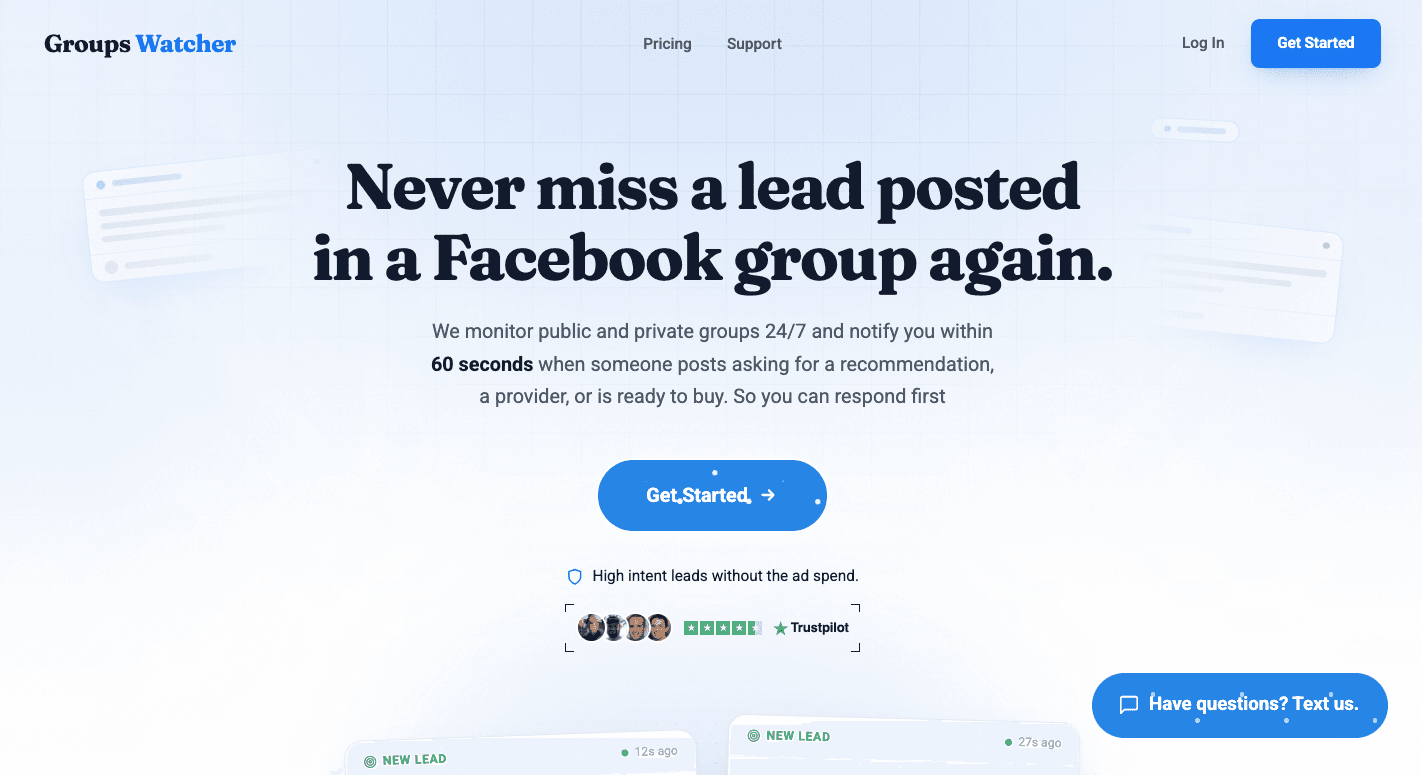
Facebook sentiment analysis allows you to understand how people feel. Groups Watcher is a powerful tool that helps you find those conversations the moment they appear in Facebook groups.
It monitors both public and private Facebook groups, even without admin access or group membership. You can track every new post or only posts that match your keywords.
AI filters results for better accuracy, while alerts arrive in under 60 seconds through email, Slack, Discord, Teams, SMS, or webhooks.
You can even use automatic comments with your saved reply, so it's easier to be one of the first people to respond while the discussion is still active.
Groups Watcher helps you organize sentiment data, support real-time analysis, and create faster responses to customer conversations.
Every new Facebook group post is a chance to connect with a customer. Groups Watcher helps you find those opportunities early and reply before competitors!
FAQs About Facebook Sentiment Analysis
What is Facebook sentiment analysis?
Facebook sentiment analysis uses AI to analyze posts, comments, reviews, and other Facebook content to determine whether opinions are positive, negative, or neutral.
Can I use ChatGPT for sentiment analysis?
Yes. ChatGPT can analyze small sets of Facebook posts or comments that you provide, summarize opinions, and identify positive, negative, or neutral sentiment. It can't monitor Facebook automatically or analyze content it can't access.
Is Facebook Insights still available?
Yes. Facebook Insights is still available, although Meta now includes many Insights features inside the professional dashboard and Meta Business Suite.
What is a good social sentiment score?
There's no single benchmark because a good score depends on your industry and goals. In general, a higher percentage of positive mentions than negative ones indicates a healthy brand sentiment.
Ready to get more leads from Facebook groups?
Book a demo and see how Groups Watcher can turn Facebook groups into a lead source for your business.
Book a demo