Facebook Group Analytics: Your Full 2026 Guide
A Facebook group can grow by hundreds of people each month, yet conversations may still slow down.
Numbers like new members, comments, reactions, and top posts explain what's really happening. Facebook Insights collects much of that information for group admins, but the built-in reports have limits.
Some businesses need more detailed analytics to follow trends, watch keywords, or compare results over time.
In this article, you'll learn what Facebook group analytics means, what you can measure, and where Facebook's built-in tools fall short.
TL;DR
Facebook group analytics uses Facebook group Insights to measure member growth, engagement, activity, and membership for eligible groups.
You can track new members, membership requests, posts, comments, reactions, top contributors, and customer sentiment.
Only admins and moderators can access group Insights. Facebook also limits competitor analysis, keyword tracking, and sales reporting.
Groups Watcher monitors public and private Facebook groups, sends alerts in under 60 seconds, and helps you comment before your competitors.
What Is Facebook Group Analytics?
Facebook group analytics is the information Meta collects about your group's activity. Facebook Insights is the free dashboard that displays an auto-updated report for eligible groups.
According to Meta, the dashboard becomes available after your group reaches more than 50 members. You can check the official Meta Business Help website for the latest reporting rules and guidelines.
The dashboard includes three main features:
Growth shows your total members and join requests.
Engagement tracks posts, comments, reactions, popular activity times, and top posts.
Membership shows top contributors plus anonymous details such as age, gender, and location.
All of this data helps you see what your community enjoys and how members participate.
Get high intent leads from Facebook groups.
Turn Facebook groups into a lead source for your business. Book a demo to see if it fits.
Book a demoHowever, businesses that need detailed analytics often use other tools to track more than Facebook's built-in reports.
What Can You Measure With Facebook Group Analytics?
Facebook group analytics gives you several key metrics that show how your group changes over time. Each report focuses on a different part of your group, from member growth to daily activity and discussions.
Member Growth
Member growth shows how fast your group grows and how people join. You can monitor the total number of people who clicked the "Join Group" button and see how many new members entered your group during the last 7 or 28 days.
Facebook also displays your membership history with line graphs, which makes sudden increases or slow periods easy to spot.
You can review membership requests to see how many people your team approved or declined. Rejected requests often reveal how much spam or unwanted activity your group attracts.
Active Members
Active members show who visits or interacts with your group during a selected period. Facebook counts users who viewed the group, published a post, left a comment, or reacted to content.
You can compare active people with all group members to calculate your engagement rates and see if people actually engage with your posts or simply scroll by.
Those numbers give you a helpful way to spot activity changes before the group becomes quiet.
Posts Published
Posts published measures how much content appears in your group over the last 7 or 28 days. Facebook separates posts from admins and moderators from posts shared by members, which shows who is creating new discussions.
Aside from that, the report helps you compare content types. For example, you can see if videos, photos, or text posts receive more attention, so it's easier to adjust your content strategy with real activity data.
Comments and Discussions
Comments and discussions measure how often members reply to posts.
Every comment counts as one interaction, which helps you see how active each conversation becomes. A group with fewer posts can still have strong discussions if members keep talking to one another.
Reviewing the most active conversations helps you understand what interests your audience. You can compare discussion volume over time and identify topics that encourage longer conversations.
Reactions and Engagement
Facebook counts every reaction: Like, Love, Care, Haha, Wow, Sad, and Angry.
You can check your engagement metrics to see the emotional heartbeat of your community and compare activity over the last 7 or 28 days.
Facebook combines posts, comments, and reactions into one engagement total. You can view your engagement levels and compare them with the previous period.
Open the "top posts" section to see what made people stop scrolling. Facebook ranks every post by activity, which helps you find the one with the highest engagement.
Top Contributors
Top contributors ranks the most active members during the last 7 or 28 days. The leaderboard shows each person's name, number of posts, and number of comments.
Contributors, in addition, often answer questions, welcome new members, and start discussions. Group admins can give them special badges or invite them to become moderators.
Keyword Frequency
Keyword frequency helps you follow common words and topics in your group. You can identify repeated phrases that show what people discuss most often and shift your focus toward subjects that receive the most attention.
Facebook includes moderation alerts for selected words. You choose the terms, then Facebook handles the process of flagging matching posts or comments in real time.
Businesses often track words like "help," "refund," or product names to spot common questions faster.
Customer Sentiment
Customer sentiment shows how members feel about your group, products, or brand. Reaction icons give you a quick idea of the group's mood.
For instance, a large number of Love or Care reactions usually shows positive feedback. Then, when there are more Angry or Sad reactions, it may point to a problem.
Moderation alerts can track negative words such as "broken" or "scam." If people mention poor service more often than usual, you can investigate the issue before more complaints appear.
Regular checks help you maintain a friendly and welcoming community.
How to Access Facebook Group Analytics
Facebook lets admins check analytics from both a computer and the mobile app. A desktop browser displays larger charts, but both options give you access to the same main reports.
On desktop:
Sign in to Facebook.
Click "Groups" from the left menu.
Select a group you manage.
Open the "Admin Tools" sidebar.
Click "Insights."
Browse the organized menu and choose "Growth," "Engagement," or "Membership" to view the report you need.
Meanwhile, on mobile:
Open the Facebook app.
Go to "Groups" and select your group.
Tap the manage icon at the top of the group page.
Open "Admin Tools."
Tap "See All" under the Insights section to open each report.
For easier comparisons, track your numbers with the 28-day date filter.
What Are the Limitations of Facebook Group Analytics?
Facebook Group Insights gives useful information, but the social media dashboard comes with several limits:
Only Available to Admins and Moderators
Only admins and moderators can open Facebook Group Insights. Regular followers can't view member growth, activity charts, popular times, or the top contributors leaderboard.
Meta keeps this analysis private to protect member information and stop competitors from studying how your group grows or what content performs best.
Cannot Analyze Groups You Do Not Manage
Facebook only shows analytics for groups you manage. You can't check the Facebook performance of a competitor's group or compare their activity with yours.
You can see a competitor's member count, but Facebook hides the group's performance, including growth trends, popular posting times, and engagement history.
No Keyword Monitoring
Facebook doesn't count how often members use specific words or phrases. You won't see charts that rank your most common topics or product mentions.
Moderation alerts can notify you when someone uses selected words, but the platform treats those alerts as safety tools. Outside marketers can't create automatic keyword summaries or text clouds with Facebook's native features.
Limited Business Intelligence
Facebook Group Insights can't connect engagement with revenue. You can't create sales reports or measure purchases from group activity alone.
Many businesses place tracking links in posts and use website analytics to generate reports about sales or conversions. Long-term records often require exporting data to Google Sheets by hand because Meta does not integrate Group Insights with CRM software.
It is crucial to use your own tracking methods if you want to measure return on investment.
Get Better Facebook Group Insights With Groups Watcher
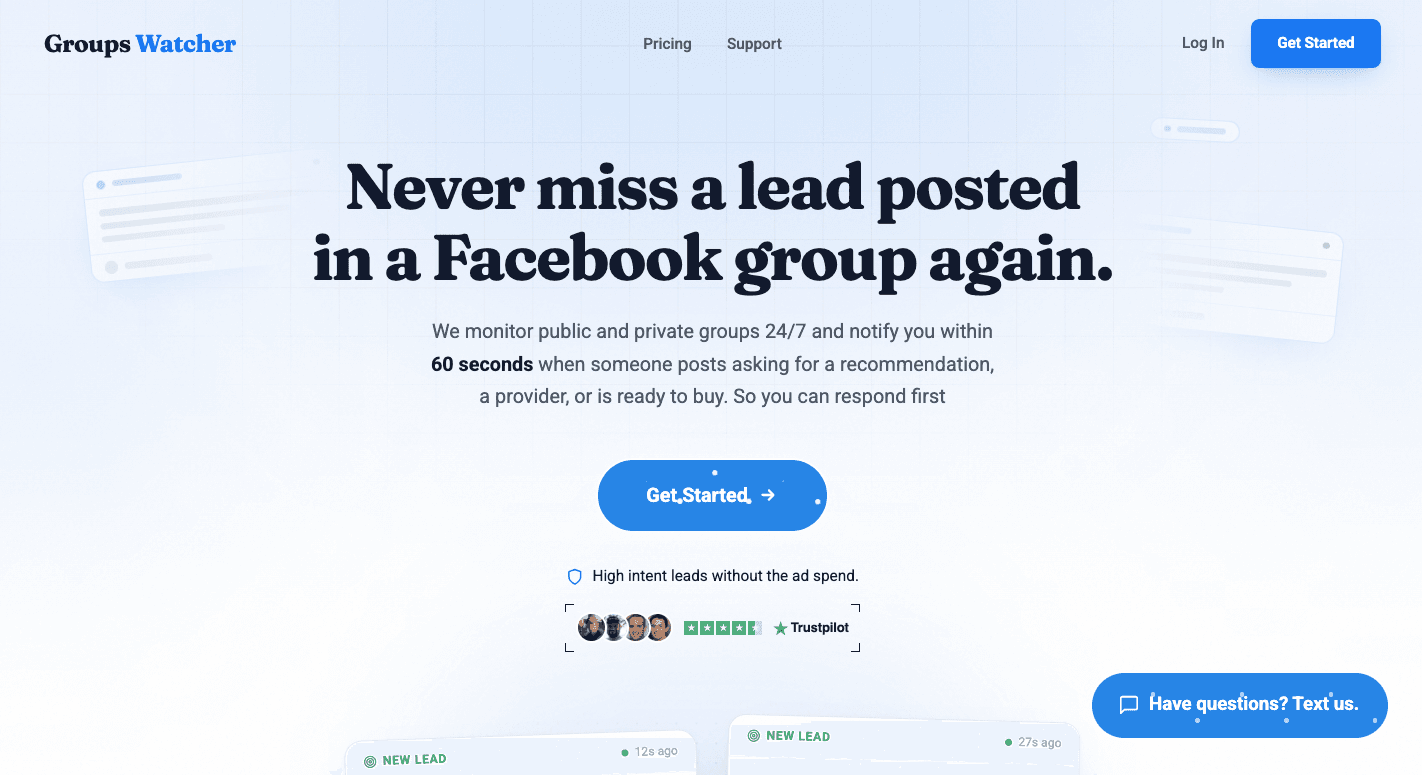
Facebook Group Insights only shows information from groups you manage. Groups Watcher goes further by monitoring both public and private Facebook groups, even if you are not an admin or a member.
It tracks your selected groups all day and sends an alert in under 60 seconds after a matching post appears. You can receive alerts for every new post or only posts that match your keywords.
Since AI reads the meaning of each post, it removes many unrelated alerts.
Alerts arrive through email, Slack, Discord, Microsoft Teams, SMS, or webhooks. You can even set automatic comments with your own saved reply.
Fast alerts, smart filters, and automatic replies enhance your chances of reaching people first, finding leads, and joining important conversations before someone else does.
FAQs About Facebook Group Analytics
Do Facebook groups have analytics?
Yes, Facebook groups have analytics through Facebook Insights. Eligible groups with more than 50 members can view reports for growth, engagement, membership, and top contributors.
How to see Facebook group statistics?
Open Facebook, go to a group you manage, open "Admin Tools," then select "Insights." Choose a report such as "Growth," "Engagement," or "Membership" to view your group statistics.
What happened to Facebook Analytics?
Meta retired Facebook Analytics in 2021. Today, Facebook uses separate reporting tools, including Facebook Insights for groups, pages, and other business assets.
Ready to get more leads from Facebook groups?
Book a demo and see how Groups Watcher can turn Facebook groups into a lead source for your business.
Book a demo