Social Listening for Closed Facebook Groups: What Works
Brands spend a lot of time monitoring public communities through social media listening tools, but many buying conversations happen somewhere else.
Closed Facebook groups often fill up with recommendations, product questions, and honest feedback from real customers. Those discussions can reveal opportunities that public posts never show.
This guide covers why traditional Facebook social listening tools have limits and what actually works for monitoring closed Facebook groups.
TL;DR
Social listening for closed Facebook groups requires specialized methods because traditional tools can only access public Facebook content.
Manual searches, browser extensions, and dedicated monitoring software each offer different ways to follow closed group discussions.
Closed Facebook groups reveal customer pain points, buying intent, competitor mentions, product feedback, and common questions.
Groups Watcher monitors both public and private Facebook groups, sends alerts in under 60 seconds, and helps you respond before competitors.
Why Traditional Social Listening Tools Struggle With Closed Facebook Groups
Meta controls both the rules and the technology behind Facebook groups, which limits what traditional listening platforms can collect.
Facebook Privacy Restrictions
Meta focuses on user privacy, especially on groups where members expect more private discussions. Many people join these communities to ask personal questions, request recommendations, or discuss sensitive topics with people they know or trust.
Conversations in private Facebook groups stay hidden from anyone who’s not an approved member. Standard search engines and automated systems can’t read posts inside these closed communities.
Meta’s Developer Terms also prevent software companies from using personal profiles to enter restricted groups and collect information. Companies that build listening platforms should follow those rules if they want to keep developer access.
As a result, many software companies only collect public conversations. They can monitor Facebook pages and other public content, but group discussions remain protected.
Get high intent leads from Facebook groups.
Turn Facebook groups into a lead source for your business. Book a demo to see if it fits.
Book a demoEven with those limits, Facebook remains one of the largest sources of customer discussions online.
API Access Limitations
Meta once offered a Groups API that approved developers could use to access group data. However, it permanently removed that API and the related permissions, including “groups_access_member_info” and “publish_to_groups.”
After that change, social media management platforms lost their official connection to Facebook groups.
Many popular tools still monitor Facebook, but they now rely on the remaining Graph API. It only returns approved public information.
Software companies that serve enterprise brands should follow Meta’s Developer Terms. Those agreements prevent them from creating features that bypass official access rules.
Today’s Graph API filters out social data created in closed Facebook groups before any listening platform can request it. Public pages remain available, but private group discussions don’t.
Methods for Social Listening in Closed Facebook Groups
Your budget, goals, and the type of groups you follow all affect how you collect information and maintain effective social listening. These are the common ways to monitor closed Facebook groups:
Manual Facebook Searches
Manual searches follow Facebook’s own search tools, which makes them the safest option.
Start by finding relevant groups that match your industry, then request access with your real name or a business profile.
After an admin approves your request, open the search icon inside the group to find older posts. Facebook searches both the main post and customer comments, so you can find discussions that still receive replies.
Sort the results by date to review relevant posts first. To get better results, use the right keywords, such as product names, common spelling mistakes, competitor names, or phrases customers often use.
Manual research, however, takes time, especially if it has a high data volume, because you should read individual messages one at a time.
Browser Extension
Some browser extensions handle basic social monitoring by reading the text that appears in your browser after you open a Facebook group. As you scroll, the extension monitors the post content for your selected keywords.
Since it only reads pages already visible on your screen, it limits data overload. Monitoring then stops as soon as you close your browser or laptop, which makes it useful for only a few hours each day.
Meta doesn’t approve automated data collection methods like these. Considering that, account suspension is still a common challenge for anyone who depends on browser extensions for long-term monitoring.
Dedicated Facebook Group Monitoring Software
A dedicated platform, such as Groups Watcher, can monitor groups for you, which means you don’t need to keep a browser open or stay logged into Facebook all day. It collects raw data from its monitoring network and reviews a sheer volume of new discussions every minute.
It then uses AI to decide whether a post matches your selected keywords or intent before sending an alert.
You can receive an alert in under 60 seconds through email, Slack, Discord, Microsoft Teams, SMS, or webhooks. Besides, it doesn’t depend on your computer, browser, or Facebook notifications to keep checking for new posts.
Many monitoring services build indexes of public groups, but Groups Watcher monitors both public and private Facebook groups.
Skip manual Facebook searches and stop using risky browser extensions. Let Groups Watcher monitor public and private groups for you and notify your team as soon as matching posts appear!
Why Businesses Want Social Listening in Closed Facebook Groups
Private communities often contain honest opinions that never reach public review sites, which explains why many brands invest in Facebook social listening to understand what customers really think.
Discover Customer Pain Points
Customers rarely explain every problem in a public review. Many feel more comfortable sharing detailed frustrations in comments or group discussions where they talk with other members.
Reading those unprompted complaints gives you valuable insights into problems that public reviews often leave out. Casual conversations usually explain why a product failed, what support could not fix, or why someone switched to another company.
You can improve future products or services by analyzing conversations about your competitors’ mistakes. Detailed negative feedback further gives engineering teams a clearer view of real customer needs.
Private communities often provide rich insights that surveys can’t match.
Find Buying Intent Before Competitors
Many purchase decisions begin with a simple question like, “Can anyone recommend a good roofer?” or “What’s a better alternative?” Facebook posts like these show that someone is ready to buy.
Businesses often monitor competitor mentions to find people who want a different provider. A recommendation request can quickly become a new lead if your team replies before others.
Fast replies help local businesses stay ahead of competitors in active groups. Buying requests can reveal local market trends, so you have better information for smarter business decisions such as inventory planning or service coverage.
Early replies place your business in front of a highly relevant audience.
Monitor Brand Mentions
Many customers never tag a business when they talk about a product or service. Companies need to track mentions on Facebook groups to understand how people describe their brand when no one from the company joins the discussion.
Manual sentiment analysis helps you identify patterns in customer opinions. Early complaints can warn your team about potential crises before they spread to larger communities.
Regular monitoring supports reputation management by helping you respond sooner. A complaint about poor delivery or customer service gives you a chance to resolve issues before someone posts a public review.
Many real brand examples show how ignored community discussions later became larger business problems.
Collect Product Feedback
Customers often explain how they actually use a product after they buy it. You can spend time gathering insights from hobby groups because members openly discuss what works and what doesn’t.
Days after product launches, users may report software bugs, missing features, or broken parts before they contact customer support. Sharing that feedback with product teams helps you fix problems sooner.
Many group members upload photos or videos that show real product use, too. Practical examples like these help you turn insights into better instructions, product updates, or future designs.
Identify Frequently Asked Questions
Private groups often contain the same questions every week. Keeping a record of those discussions helps you identify recurring themes that deserve better answers.
You can spot trends by reviewing the questions people ask most often. Popular topics often become useful blog posts, videos, or help articles that strengthen your campaign strategy.
Clear answers build trust and support community building over time. Five similar questions in one group usually mean many customers need the same information.
Sending those findings to the right team helps your public FAQ answer real customer questions.
Strengthen Your Facebook Monitoring Strategy With Groups Watcher
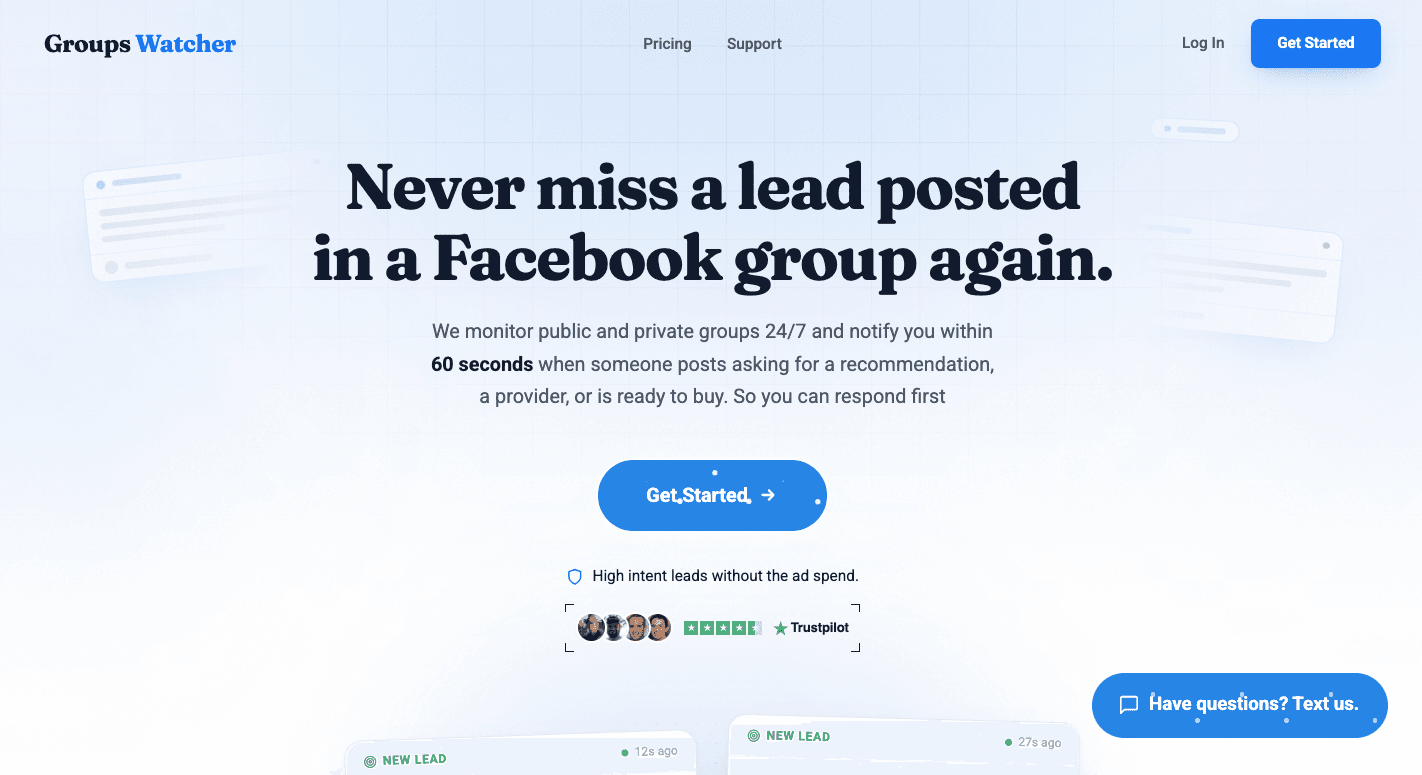
Groups Watcher monitors both public and private groups, even if you aren’t an admin.
Unlike many tools, it doesn’t require access to your Facebook account, which means your personal profile stays separate from the monitoring process.
To set it up, you need to:
Send the Facebook groups you want Groups Watcher to monitor.
Choose alerts for every post that match your keywords.
Receive alerts in under 60 seconds through email, Slack, Discord, Microsoft Teams, SMS, or webhooks.
Open the post, reply yourself, or use automatic comments to be one of the first people to respond to relevant conversations and send direct messages.
With Groups Watcher, you can review new discussions to gain insights from both public and private communities without checking Facebook all day.
FAQs About Social Listening Closed Facebook Groups
What does a closed Facebook group mean?
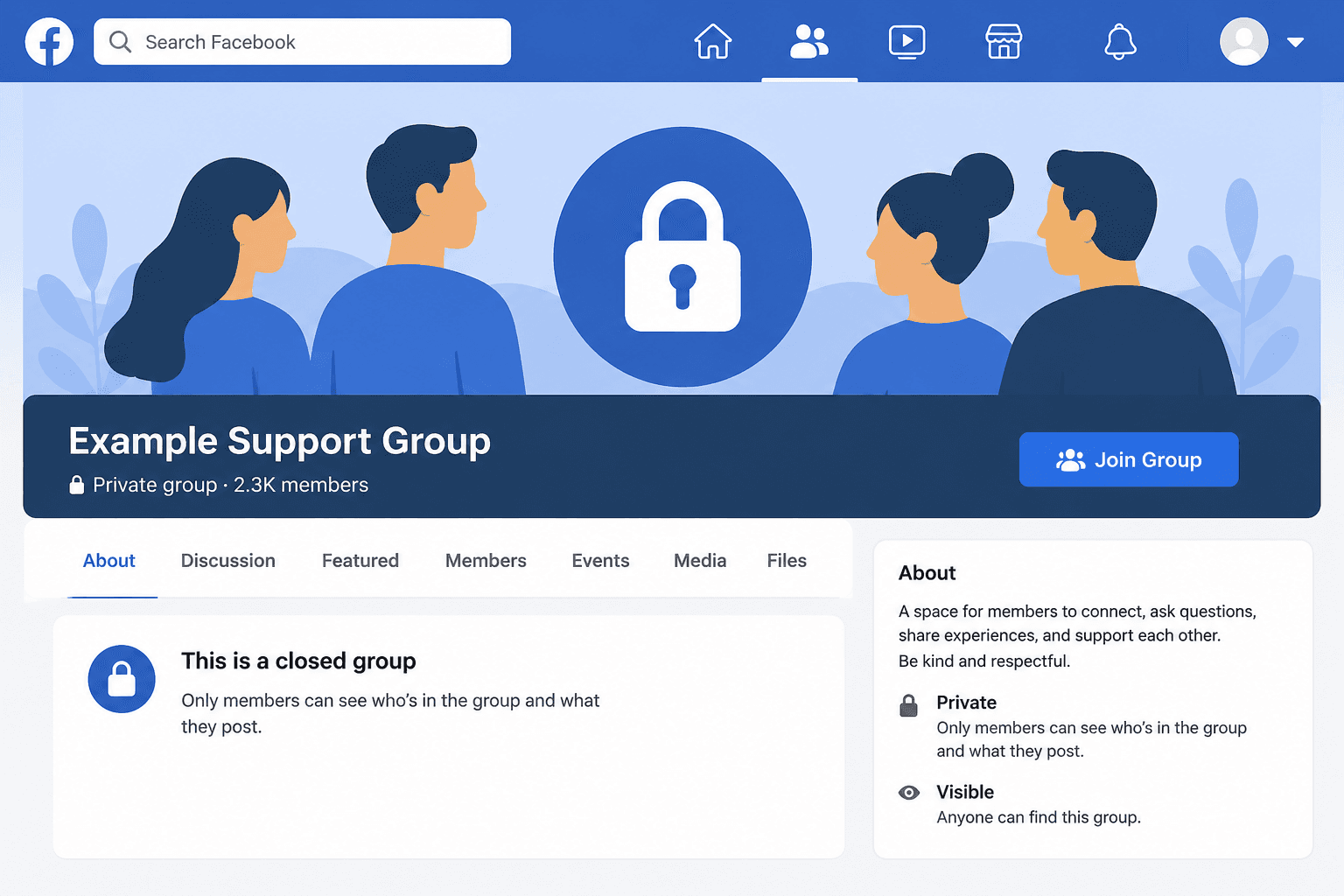
A closed Facebook group is a community where anyone can find the group, but only approved members can see posts, comments, member lists, and other discussions.
Can I still see closed Facebook groups?
Yes, but only after a group admin approves your request to join. Until then, Facebook hides the group’s conversations, even though you may still see its name and description.
Is Meta shutting down Facebook groups?
No. Meta hasn’t announced plans to shut down Facebook groups. The company has changed some developer tools used by third-party software, but Facebook groups remain available alongside Meta’s other social media platforms.
Ready to get more leads from Facebook groups?
Book a demo and see how Groups Watcher can turn Facebook groups into a lead source for your business.
Book a demo