5 Home Services Social Media Marketing Strategies That Work

Homeowners often use social media when they need help with their homes. Someone may ask a local Facebook group for a plumber, check Instagram for a remodeler’s recent work, or watch an HVAC company explain a common AC problem on YouTube.
A home services social media marketing plan helps you reach these people, show the quality of your work, and earn their trust before they contact you. You don’t need to post everywhere to get results.
In this article, you’ll learn five social media strategies that can help you reach local customers and generate leads.
TL;DR
Here are the five home services social media marketing strategies that work:
Show real home service projects on social media
Create helpful content around homeowner problems
Use customer reviews to build trust on social media
Upload short-form video to explain your home services
Use paid social ads to reach local homeowners
Groups Watcher identifies homeowner service requests in relevant Facebook groups so your business can respond while the conversation is active.
How to Choose Social Media Platforms for Your Home Service Business
Choose platforms based on how your customers look for help, what type of content fits your services, and where you can stay active without spreading your time too thin.
Facebook lets you build trust before a homeowner has a leaking pipe or broken AC.
Many home service businesses use a page to share real jobs, reviews, and team photos. Treat yours like a second home services website by adding accurate hours, your service area, phone number, and a clear contact button.
Get high intent leads from Facebook groups.
Turn Facebook groups into a lead source for your business. Book a demo to see if it fits.
Book a demoLocal groups give local businesses another way to find people who need help. Watch for posts such as, “Can anyone recommend a roofer?”
Meta ads can help small businesses focus their budget on locations they serve rather than paying for clicks from homeowners too far away.
Facebook Groups
When someone posts, “Our basement is flooding. Who do you recommend?” you don’t have to guess if they need your service. Facebook groups can put you in front of prospective customers with a real problem.
Focus on communities where your customers live:
Neighborhood and HOA groups: Search for communities within your service cities.
Local parent groups: Members often ask neighbors for trusted contractors.
Buy and sell groups: Homeowners may request cleaners, landscapers, or repair help.
Existing customers can strengthen your reach when they tag your company in recommendation threads. Check each group’s rules before promoting your services.
When someone needs help, offer useful advice first. That direct interaction feels more natural than dropping a sales pitch.
You can also use Groups Watcher for Facebook monitoring. Give it the Facebook group URLs you want monitored, then choose keywords, intent phrases, and exclusions.
Groups Watcher monitors your selected public and private groups 24/7 and checks new posts for service requests that match what you’re looking for. AI-based relevance scoring helps identify relevant posts, and alerts are sent via email, Discord, Slack, Teams, SMS, or webhooks within 60 seconds.
You can respond from the alert yourself, or use automatic comments to be one of the first businesses to respond.
Facebook Page
Your Facebook page gives homeowners a place to learn about your company before they contact you. Keep your phone number, website, hours, service area, and contact options current.
Post recent projects instead of filling the page with ads. Before-and-after photos, customer reviews, technician videos, and maintenance tips show what your crew does and give people examples of your work.
Include seasonal reminders when they fit your services, such as AC tune-ups before hot weather or gutter cleaning before heavy rain.
Instagram is like a visual portfolio for services people want to see before they hire someone. Real kitchen remodels, clean roofing work, or yard makeovers can build online visibility far better than a feed full of stock photos and company logos.
Use Reels to show quick transformations or short job clips. You don’t need costly design tools when a clear phone photo already shows the quality of your work.
Add the town or city location to relevant posts to support local visibility, then give interested homeowners a profile link that can send web traffic to your quote or booking page.
TikTok
TikTok lets you share useful or interesting short-form videos.
Film a 30-second answer to a common question such as, “Why is my AC blowing warm air?” That type of content can introduce your company to a younger target audience before something breaks.
People use TikTok search to find topics and places, which gives the app a role in local search. A useful clip can bring more traffic to your profile when viewers want professional help.
Contractors who don’t have time to film and edit may hire a digital marketing agency to handle video production.
YouTube
Homeowners often turn to YouTube when they have a problem and want to understand it. A video titled “Why Is My Water Heater Making a Popping Noise?” answers a real question and shows your knowledge before someone calls.
Google can display relevant videos in search engine results, which gives useful content another chance to appear in Google Search.
Build each title around the words a homeowner would actually type, then explain the answer in plain language. Those videos may appear on other search engines as well.
Choose LinkedIn when you want commercial contracts, property accounts, or professional partnerships rather than one-time residential repairs. You can connect with property managers, facility teams, developers, and real estate professionals who help choose service vendors.
Treat your profile as a professional business front. Show your services, service area, credentials, and industry experience, then back those details with case studies from real commercial jobs.
A new connection can later become part of your email marketing when that person agrees to receive messages.
5 Social Media Marketing Strategies for Home Services Companies
A home services digital marketing plan combines local conversations, real project proof, useful answers, customer feedback, videos, and paid ads to reach homeowners at different points before they hire. These are the five strategies you can apply:
1. Show Real Home Service Projects on Social Media
Real jobs give potential customers proof that your crew knows the work. Take a photo of the problem when you arrive, such as a damaged roof, stained carpet, or old water heater. Capture the finished result from the same angle to make the change easy to see.
Short videos can show current and potential customers how you work. Film the problem, a few parts of the job, and the final result.
Seeing clean work areas, branded trucks, and uniformed technicians may help you attract more customers who care about professionalism. Then, mention the town as it helps people understand your service area.
Before you record anything, check the background for house numbers, family photos, paperwork, license plates, or other private details. Ask the customer for permission before posting their property.
2. Create Helpful Content Around Homeowner Problems
Homeowners usually want answers when something goes wrong. Give helpful advice that can save them time, such as how to check an HVAC filter or spot signs of a leaking water heater.
People may remember who helped when the problem later needs professional work.
Turn common customer questions into 30-to-60-second videos for Facebook, Instagram Reels, or TikTok. A title like “Why Is My AC Blowing Warm Air?” uses relevant keywords naturally and tells viewers exactly what they’ll learn.
Clear titles and descriptions support basic search engine optimization and can help useful posts bring organic leads over time.
Keep your advice to safe checks, maintenance, and visual inspections. Never teach viewers to handle live electrical parts, gas lines, or other dangerous repairs.
3. Use Customer Reviews to Build Trust on Social Media
A review that says, “The technician arrived on time, cleaned everything up, and charged the quoted price,” answers concerns a homeowner may have before booking. Share feedback from satisfied customers instead of leaving it buried on a review page.
Don’t post a plain screenshot every time. Make online reviews easier to read on a phone:
Pair one strong quote with a photo of the finished job.
Highlight the technician when the customer mentions them by name.
Add a short thank-you that sounds personal rather than promotional.
After a good job, send the customer a review link while the experience is fresh.
Positive reputation management also means replying to feedback. Handle negative reviews calmly and offer to discuss the problem by phone.
When sharing reviews publicly, use limited customer details such as “Mike D.” and never expose private contact information.
4. UseShort-Form Videos to Explain Your Home Services
Homeowners don’t want to read a long post about your 20-point HVAC inspection when they can watch the important parts in 30 seconds. A simple vertical video can show the problem, your technician’s work, and the result in a format that can boost engagement.
You can structure your clip like this:
Start with the problem: “If your light switch feels warm, don’t ignore it.”
Show the explanation: Point out what your technician found and explain the issue in everyday words.
Give one next step: “Tap the link to book an electrician if you’re seeing this at home.”
Have technicians capture a few useful clips from each job. Real field footage can build social proof that leads to more jobs.
Keep your booking link mobile-friendly to capture more leads, and answer questions in the comments to support your online reputation.
5. Use Paid Social Ads to Reach Local Homeowners
Digital advertising works best when you know who you want to reach, where they live, and what you want them to do. A Facebook video for AC repair, for example, can generate leads from homeowners within the towns your technicians already cover.
Set a tight geographic area to avoid wasting money on people you won’t serve. Meta can distribute campaigns on multiple platforms such as Facebook and Instagram.
Don’t assume expensive neighborhoods automatically produce qualified leads. Test location, offer, creative, and actual booked jobs to learn where your best customers come from.
Social ads can support pay-per-click platforms such as Google Ads and active PPC campaigns that capture search demand. In marketing for home services, use search ads to capture existing demand and social ads to build awareness or promote seasonal offers.
Send ad clicks to a focused landing page, track booked work, and keep local SEO active for unpaid searches. SEO experts can help connect those service pages with relevant search terms.
What Should Home Service Businesses Post on Social Media?
Your social media posts should be a mix of:
Before-and-After Projects
Show the problem exactly as your technician found it, then photograph the finished work from the same angle. A rusted water heater beside its replacement or a stained carpet beside the cleaned room gives homeowners proof they can judge for themselves.
Real projects can support your wider digital marketing because one job can become a Facebook post, Instagram Reel, TikTok, and website case study. Local sites may even link to useful project stories, which gives you opportunities to earn high-quality backlinks when the content genuinely deserves a reference.
Helpful Tips and Answers
Helpful content can support home services marketing by giving people a reason to remember your company before they need a repair. Keep each answer focused on one problem and tell homeowners when they should stop troubleshooting and call a professional.
Customer Reviews and Testimonials
Don’t leave your best reviews sitting on one review site. Pair a customer quote with the actual project, such as a new roof or finished bathroom, to show people what the reviewer received.
Video testimonials can feel even more personal. Ask happy customers if they’re comfortable sharing a short comment about the problem and their experience with your crew.
Meet-the-Team Content
Homeowners may feel nervous about letting a stranger into their house. Photos of your uniformed technicians, branded trucks, and office staff help people recognize who may arrive at their door.
Introduce each person with useful details, such as their role and the type of work they handle. Simple posts like these make social media management easier because your crew already gives you plenty of real content to share.
Behind-the-Scenes Job Content
Show what happens between the before and after photos. A short clip of a technician testing an HVAC system or preparing a room for paint helps people understand the work that goes into the finished result.
Job-site content can support your marketing efforts without requiring a separate photo shoot. Give technicians a simple checklist of moments to capture, then spend a few minutes reviewing the footage before posting it.
Local and Seasonal Content
Post reminders that match the problems homeowners face during different parts of the year. An HVAC company could talk about AC maintenance before hot weather, while a plumber might explain how to prepare exposed pipes before freezing temperatures.
Plan these social campaigns around real demand in your area rather than copying a national calendar. A home services marketing agency can manage campaigns for contractors that don’t have enough time to plan, publish, and review them in-house.
Offers and Service Reminders
Use social media to remind current customers about services they may need again, such as seasonal HVAC tune-ups, gutter cleaning, pest treatments, or yearly inspections. Keep the offer clear about the service, timing, price or discount, and how someone can book.
Paid offers can support lead generation when you have open appointment slots. Match each campaign to your business goals, then track key performance indicators such as cost per lead and booking rate instead of judging success by likes alone.
Stay on Top of Home Service Conversations With Groups Watcher
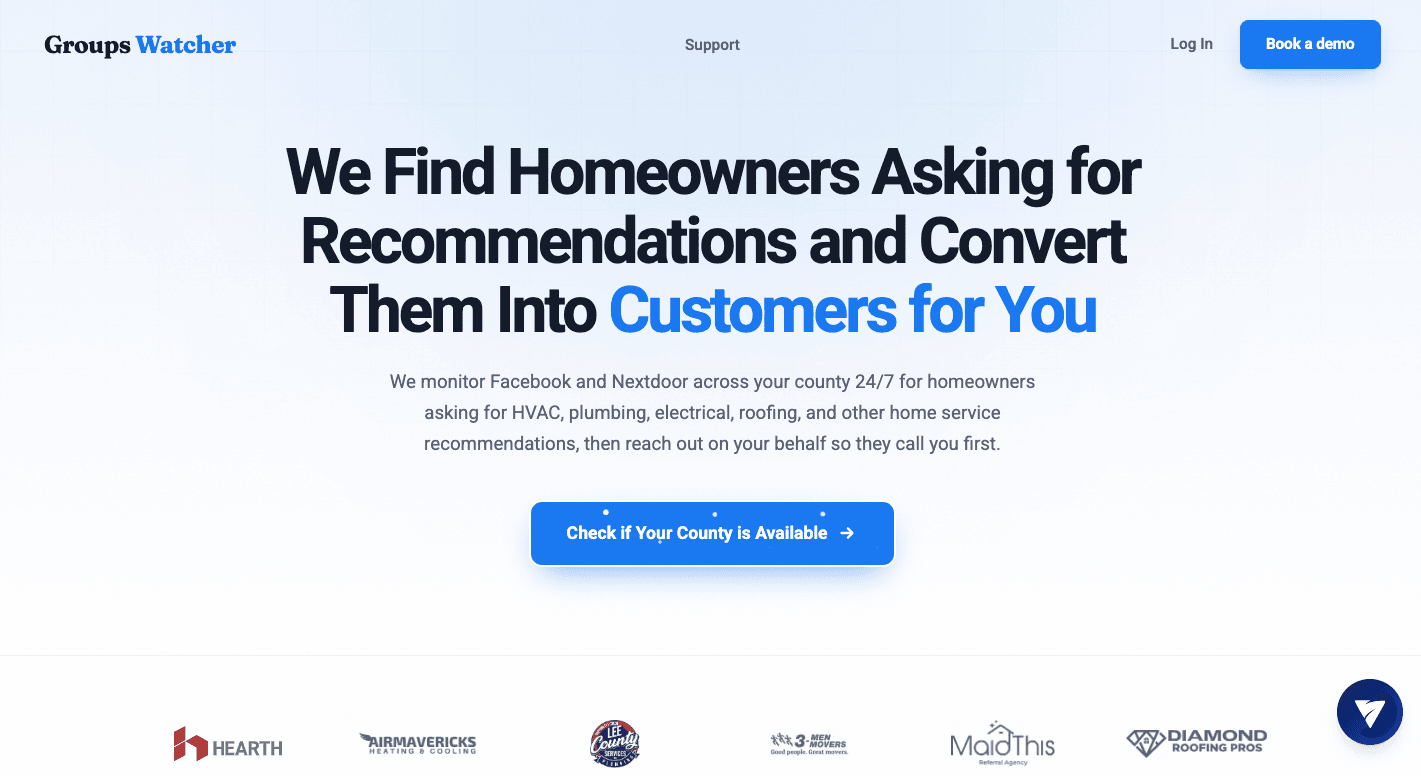
A homeowner can ask a local Facebook group, “Can anyone recommend a plumber who can come today?” Groups Watcher helps you catch requests like that without checking groups yourself all day.
Give Groups Watcher the Facebook group URLs you want monitored, then choose keywords such as “looking for,” “recommend,” and “need help,” plus your services, locations, and exclusions. You don’t need to provide your Facebook account or have admin access.
Groups Watcher monitors your selected public and closed groups 24/7. It checks new posts and uses AI-based relevance scoring to identify requests that fit what you’re looking for. Relevant alerts arrive within 60 seconds via email, Discord, Slack, Teams, SMS, or webhooks.
You can open the post and reply yourself or use automatic comments to be one of the first businesses to respond.
FAQs About Home Services Social Media Marketing
Does social media marketing work for home service businesses?
Yes. Social media marketing can help home service businesses show real projects, build trust, answer homeowner questions, and reach people who need local services.
Which social media platform is best for home services?
Facebook is often a strong starting point for home services because businesses can share project proof, run local ads, communicate with homeowners, and find service requests in local groups.
Is Facebook good for home service businesses?
Yes. Facebook gives home service businesses several ways to reach local homeowners through pages, groups, Messenger, reviews, project content, and paid ads.
How often should a home service business post on social media?
A home service business should choose a posting schedule it can maintain consistently. Posting a few useful pieces each week is usually more practical than publishing every day with little value.
Ready to get more leads from Facebook groups?
Book a demo and see how Groups Watcher can turn Facebook groups into a lead source for your business.
Book a demo