The Complete Guide to Facebook Social Listening [2026]
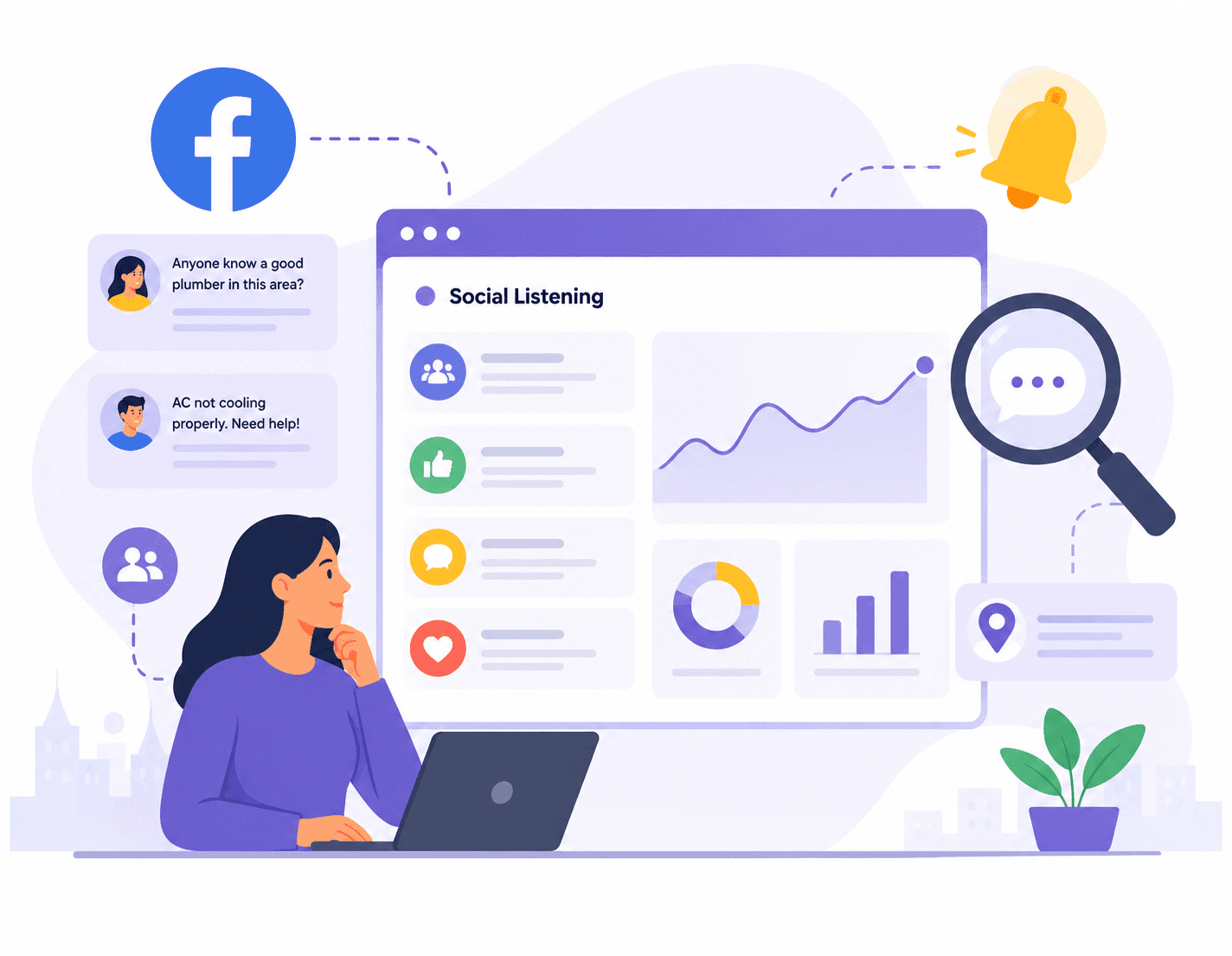
Facebook gives you more than likes, shares, and follower counts. Every recommendation request, product review, and customer question adds another clue about how people view your brand and your competitors.
Looking at those conversations can reveal patterns that reports often miss. Facebook social listening helps your team collect that information and turn it into better decisions.
In this article, you’ll learn what Facebook social listening can reveal about your audience and how to choose the right tools.
TL;DR
Facebook social listening helps you understand customer feedback, buying intent, competitor activity, and brand perception through public conversations.
Customer discussions reveal product issues, purchase signals, competitor weaknesses, and common questions before they appear in reports.
You should track more than your brand name by monitoring competitors, customer intent, and relevant Facebook groups.
Choose a platform with real-time monitoring, keyword tracking, Facebook group monitoring, sentiment analysis, and fast alerts.
Groups Watcher monitors public and private Facebook groups and sends AI-filtered alerts in under 60 seconds.
What Can You Learn From Facebook Social Listening?
Facebook social listening can show you:
Customer Pain Points
People don’t wait for a support survey to talk about a bad experience. They post comments in Facebook groups, review sections, and comment threads as soon as something goes wrong.
You might notice common complaints about a recent software update, confusing checkout steps, or delivery delays. Imagine 50 people in a local community group saying the same app crashes after the latest update, or parents saying a clothing brand’s sizes run much smaller than expected.
If many customers describe the same issue, you’ve found a real problem, not a one-off complaint.
Those discussions also reveal how people judge your customer experience after they buy. Share those findings with your product teams so they can fix problems based on real customer feedback.
Get high intent leads from Facebook groups.
Turn Facebook groups into a lead source for your business. Book a demo to see if it fits.
Book a demoPurchase Intent
Some Facebook users ask general questions. Others have already decided to buy and only need one last answer before they place an order.
In those customer conversations, you can see direct questions like “Where can I buy this nearby?” “Does anyone have a promo code?” or “Is there a free trial?”
Someone comparing the Apple iPhone with another device has likely reached the final stage of product research. Another shopper may ask whether Brand A performs better than Brand B before making a decision.
Your tool should watch relevant keywords that match your products, competitors, and industry. Choosing the right keywords helps your team spot buyers who are ready to spend.
Brand Perception
Your marketing team controls your message, but customers decide how they describe your business.
Facebook discussions reveal your brand image through everyday language. A listening platform scans thousands of posts and groups them into positive, negative, or neutral categories.
You might notice people describe your company as “reliable” and “easy to work with,” or they may use words like “overpriced” and “slow.”
Many companies compare those findings with customer surveys to see if both tell the same story. That process helps you gain insights that surveys alone may miss.
Besides that, you can measure positive engagement after a campaign and review social media data to see whether public opinion improves or declines over time.
Competitor Mentions
Watching competitor brand mentions can reveal repeated praise for fast delivery, simple pricing, or helpful support. Complaints deserve just as much attention.
Reviewing their campaign performance shows how people react to a new advertisement or product release. Then, comparing engagement metrics and daily mention volume shows who attracts the most attention.
By learning from successful ideas and avoiding mistakes your competitors have already made, you stay ahead.
Frequently Asked Questions
People ask about return policies, shipping locations, subscriptions, warranties, and product compatibility every day. Those questions reveal unmet customer needs long before someone contacts your support team.
Repeated questions also highlight new industry trends. Your team can collect key insights from those discussions and update help articles, product pages, or onboarding guides. Similar questions often appear before major product launches, so you have time to prepare new content.
Watching trending topics further helps you publish answers before competitors notice the demand.
Common Facebook Social Listening Challenges
Knowing these limits helps you understand what your reports include and what they leave out.
Privacy rules sometimes prevent listening tools from getting full access to private profiles, private messages, and closed Facebook groups.
Research teams often face data overload because they need to sort through millions of daily posts, comments, and mentions.
Cleaning raw data takes time since spam, duplicate posts, and unrelated discussions can hide useful information.
AI can misunderstand sarcasm, jokes, slang, or cultural references and label sentiment incorrectly.
People also discuss brands on other channels, so Facebook alone can’t provide a complete insight into customer behavior.
Many marketers confuse social monitoring with social listening, even though monitoring tracks mentions and listening explains the patterns behind those conversations.
Best Practices for Facebook Social Listening
A few simple habits can help you collect better data and turn it into useful business decisions.
Track More Than Your Brand Name
People often describe a problem without mentioning a brand, especially when they need advice or recommendations.
Build a listening strategy that follows:
Product names
Common problems
Competitor names
Brand hashtags
If you sell mattresses, watch phrases like “back pain from bed” or “memory foam topper” so you’ll find relevant conversations before someone chooses a brand.
Your social listening strategy should follow changes in your industry. People talk about new products, buying habits, and regulations every day.
Watching those topics on Facebook and other social media platforms helps your team prepare for changes before they affect your business.
Monitor Competitors
Your competitors can teach you just as much as your own customers.
Start by reviewing your competitors’ pages, ads, and social channels. Read the comments instead of stopping at likes and shares to have a more comprehensive view of how people react to new products or campaigns.
If you are in the skincare industry, you can follow product terms like “face masks.” Sudden changes in those discussions may point to higher demand or supply issues.
Many third-party tools help organize that information so your team can make smarter business decisions based on real customer feedback.
Build Keyword Groups Around Customer Intent
Grouping similar searches helps your team know what each person wants.
One group can include questions such as “how to” or “best way to.” Another can track comparison words like “vs” or “review.” A third group can focus on buying phrases like “where can I buy” or “promo code.”
Those categories produce more actionable insights because they separate learning, comparison, and buying intent.
Having clean groups can further create actionable intelligence that your sales and marketing teams can use right away. Those patterns improve your campaign strategy, reveal rich insights, and support better social media management.
Include Facebook Groups in Your Strategy
Facebook groups give you a different view from a business page. People often speak more openly when they ask neighbors, friends, or hobby groups for advice.
Focus on public communities where your tool has access through Meta’s rules since they contain honest posts, detailed comments, and unfiltered public comments from real customers.
Aside from that, reading public posts helps you understand how people describe products in their own words before they visit your website or contact your business.
What Features Should a Facebook Social Listening Tool Have?
Checking feature lists before you buy gives you a complete guide to whether the platform can keep up with fast-moving conversations. For instance, your tool should offer:
Real-Time Monitoring
By the time someone checks a report the next morning, hundreds of people may have already shared or commented on the original post.
Choose a platform that tracks public conversations as they happen and alerts your team when activity suddenly increases, which helps you spot potential crises before they damage your reputation.
Real-time updates give your support team time to respond quickly when customers report a problem or ask for help, too.
Keyword Tracking
Keyword tracking does much more than watch your company name. Your monitoring tool should let you build detailed searches that match products, competitors, industries, and common phrases.
Many enterprise brands rely on Boolean searches with words like AND, OR, and NOT to remove unrelated results. It keeps your data cleaner and reduces the time spent reviewing irrelevant posts.
And the more accurate your keyword groups become, the better your social listening on Facebook results will be.
Facebook Group Monitoring
Many buying decisions begin inside Facebook groups. People ask neighbors for recommendations, compare products, and share honest opinions that rarely appear on brand pages.
Typically, social listening platforms focus mostly on public brand mentions. Groups Watcher, on the other hand, can monitor both public and private groups that you add to your workspace, and it doesn’t require your Facebook account to stay logged in or your team to check each group manually.
This means that your account is never at risk.
It also watches every new post for your chosen keywords and AI filters, then sends alerts in less than 60 seconds when it finds a match.
Your team shouldn’t have to check every Facebook group by hand. Let Groups Watcher monitor them and deliver the posts that match your filters!
Sentiment Analysis
Counting mentions only tells you how often people talk about your brand. Sentiment analysis explains how they feel.
A good platform reviews audience sentiment by reading conversations on Facebook and grouping them into positive, negative, or neutral categories.
More advanced tools can even understand sarcasm, slang, and emojis better than simple keyword matching, which leads to more reliable reports.
Alerts and Notifications
Alerts help your team react before small problems become bigger ones.
Look for a platform that sends notifications when mention volume spikes, negative sentiment rises, or someone posts a high-intent buying question.
Sending those alerts through email, Slack, Microsoft Teams, SMS, or mobile notifications helps the right people see them as soon as they happen.
Bring Every Relevant Facebook Conversation Into One Place With Groups Watcher
Your Facebook listening strategy will only work when you receive the right post before everyone else does. Groups Watcher was built for that job.
Monitor Public and Private Facebook Groups
Groups Watcher specializes in Facebook groups, where people often ask for recommendations, compare products, and discuss real experiences.
Simply share the group URLs you want to monitor. It can then monitor both public and private groups, even if you aren’t an admin.
You don’t need to keep a browser open, stay logged into Facebook, or use your own account for monitoring. Groups Watcher handles everything on its own servers and sends the alerts to you.
Get Alerts Before the Conversation Gets Busy
In many recommendation threads, people contact one of the first businesses that replies. Later comments receive much less attention.
Groups Watcher monitors your selected groups around the clock and sends alerts in under 60 seconds after a matching post appears. You can receive every new post from important groups or only alerts that match your keywords and AI relevance settings.
Alerts arrive through:
Email
Slack
Microsoft Teams
Discord
SMS
Webhooks
Reply Automatically to High-Intent Posts
Some opportunities need an immediate response. Groups Watcher can automatically post a predefined reply when a post matches your conditions.
Choose the groups, keywords, and comment template that fit your business. The platform watches for matching posts and publishes your prepared response when the conditions are met.
Your team no longer has to copy and paste the same reply every time someone asks for recommendations. That helps you stay visible even when nobody is available to monitor Facebook.
Manual replies take time, and opportunities disappear fast. Set up automatic replies with Groups Watcher and be the first to respond!
FAQs About Facebook Social Listening
What is Facebook social listening?
Facebook social listening is the process of tracking public discussions about your brand, competitors, products, and industry. It helps you understand what people say, how they feel, and what actions your business should take.
How is Facebook social listening different from social media monitoring?
Social media monitoring tracks mentions, comments, and messages as they happen. Facebook social listening looks for patterns behind those conversations, such as customer needs, buying trends, and changes in public opinion.
Can businesses monitor Facebook groups?
Yes, businesses can monitor public Facebook groups with tools that follow Meta’s rules. Some platforms, such as Groups Watcher, also monitor public and private groups that customers add to their workspace, even if they are not group admins.
What are the benefits of Facebook social listening?
Facebook social listening helps businesses understand customer feedback, protect their reputation, spot buying opportunities, monitor competitors, improve products, and make faster marketing decisions based on real conversations.
Ready to get more leads from Facebook groups?
Book a demo and see how Groups Watcher can turn Facebook groups into a lead source for your business.
Book a demo